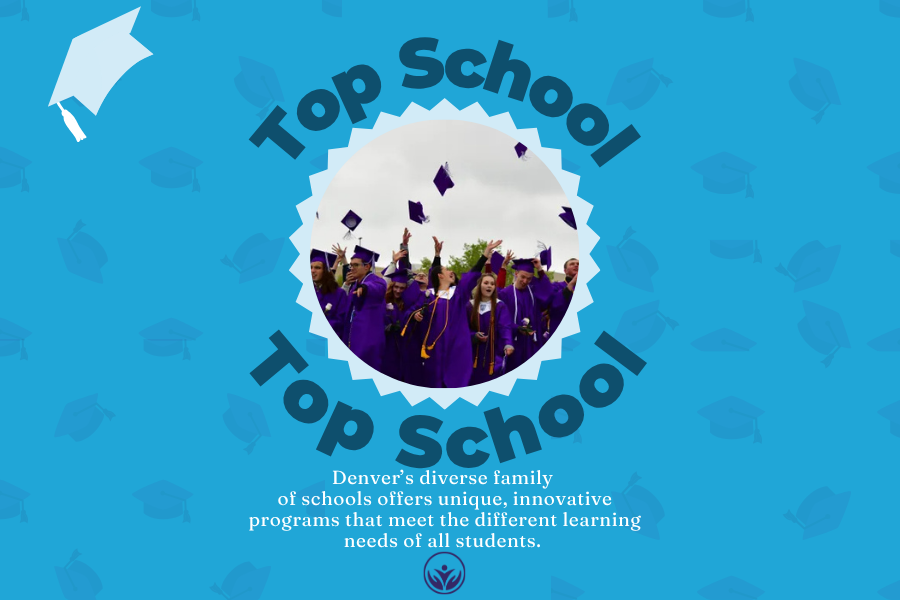
Graduation rates across Denver Public Schools (DPS) are rising, reflecting collective effort and momentum. More young people are crossing the stage, diplomas in hand, ready to take their next steps.
For the fourth consecutive year, DPS has set a new high mark for four-year graduation rates. The Class of 2025’s four-year graduation rate rose by 2 percentage points, reaching an all-time high of 81.9%.
The five-year graduation rate increased by 0.8% to 83.7%, and the six-year graduation rate improved by 1.9% to 82.4%. These results highlight the continued upward momentum within DPS, especially among students who may need more time to graduate.
As Deputy Superintendent Dr. Tony Smith notes, “Behind every percentage point is a student who persevered, a family that supported them, and an educator who refused to give up on their potential.”
This growth is not just a statistic; it represents a significant milestone that reflects real impact in our schools. Graduation is a gateway to postsecondary opportunities, economic mobility, and long-term well-being.
As a community rooted in equity and transparency, we know a single number never tells the full story. To truly understand progress, we have to look deeper.
Looking Beneath the Surface
While overall rates are improving, not all students are experiencing that positive change equally. For instance, the four-year graduation rate for Black students rose by 3.9%, and for Latine students, it rose by 2.6%.
Students from historically marginalized communities, including Black, Latine, and low-income families, often face different barriers and outcomes. Subgroup data helps us ask better questions, identify where support is needed, and ensure that rising averages are not masking persistent gaps.
Bright Spots in Our Schools
At the same time, there are bright spots across DPS that deserve recognition and attention. Some schools are achieving strong graduation outcomes for students who have historically been underserved.
The following data showcase how some schools are making a significant impact for historically marginalized students, demonstrating what’s possible when the right supports, relationships, and expectations are in place:
Top Schools for 2025 Four-Year Graduation Rates Among Economically Disadvantaged Students
- Career Education Center Early College: 96.9%
- DSST: Montview High School: 96.7%
- Kunsmiller Creative Arts Academy: 95.9%
- Northfield High School: 95.9%
- Bruce Randolph School: 95.8%
- Robert F. Smith STEAM Academy: 94.7%
- Rocky Mountain Prep SMART: 94.4%
- DSST: Conservatory Green High School: 94.3%
- DSST: Green Valley Ranch High School: 94.3%
- Denver Center for International Studies: 93.2%
Top Schools for 2025 Four-Year Graduation Rates Among Black Students
- DSST: Montview High School: 97.4%
- Northfield High School: 97.0%
- DSST: Green Valley Ranch High School: 97.0%
- DSST: Conservatory Green High School: 96.6%
- DSST: Elevate Northeast High School: 96.6%
- Manual High School: 96.0%
- Rocky Mountain Prep RISE: 95.0%
- North High School: 93.3%
- Robert F. Smith STEAM Academy: 92.9%
- Thomas Jefferson High School: 90.6%
Top Schools for 2025 Four-Year Graduation Rates Among Latine Students
- Career Education Center Early College: 98.0%
- Northfield High School: 96.8%
- DSST: Montview High School: 95.9%
- Bruce Randolph School: 95.6%
- DSST: Cedar High School: 95.5%
- Rocky Mountain Prep SMART: 95.2%
- DSST: Conservatory Green High School: 94.1%
- KIPP Northeast Denver Leadership Academy: 93.8%
- Kunsmiller Creative Arts Academy: 93.8%
- DSST: Elevate Northeast High School: 93.5%
Rethinking What Advancement Looks Like
Alternative Education Campuses (AECs) are a critical part of the DPS landscape. These schools are designed to support students who may not thrive in traditional settings by offering customized instruction and resources to help them succeed.
Some focus on project-based learning, others on flexible schedules, virtual coursework, or supporting specific life circumstances such as parenting teens.
What they share is a commitment to meeting students where they are.
Beyond Academics: Holistic Factors that Matter
The nonacademic factors like school climate, discipline practices, and teacher retention play a pivotal role in student success.
Schools with lower rates of disciplinary incidents often create environments where students feel safe, supported, and able to focus on learning. They help students build a sense of belonging, which is crucial for academic excellence.
For example, several schools in DPS have demonstrated exceptionally low discipline incidents. This reflects a school climate where the focus remains on student development, rather than disruptive behaviors.
Schools with Less than Five Disciplinary Incidents Across Groups
- Colorado High School Charter – GES
- Respect Academy
- East High School
- Emily Griffith High School
- DSST: Green Valley Ranch High School
- 5280 High School
- Excel Academy
Schools with Less than Five Disciplinary Incidents for Latine Students
- DSST: Green Valley Ranch Middle School
- East High School
- Legacy Options High School
- DSST: Green Valley Ranch High School
- Excel Academy
- DSST: Conservatory Green High School
- Montbello Career and Technical High School
- KIPP Northeast Denver Leadership Academy
- 5280 High School
- Florence Crittenton High School
- Northeast Early College
- DSST: Conservatory Green Middle School
- DSST: College View High School
Schools with Less than Five Disciplinary Incidents for Black Students
- Kunsmiller Creative Arts Academy
- DSST: Green Valley Ranch High School
- East High School
- Delta High School
- DSST: Conservatory Green High School
Teacher tenure is another critical factor. Schools with long-term teachers, especially those with over two decades of experience, foster strong relationships and a stable learning environment. This stability helps educators better address students’ needs, contributing to improved academic outcomes and greater student persistence.
High Schools with an Average Teacher Experience of 21+ Years
- Denver Montessori Junior / Senior High School
- Florence Crittenton High School
- Emily Griffith High School
- East High School
- Respect Academy
- Thomas Jefferson High School
These factors, though less visible, are essential to student achievement.
A Shared Responsibility
As graduation rates rise, we should celebrate. That forward movement reflects real effort and impact.
However, we must also recognize the importance of the nontraditional schools and nonacademic factors that create an environment for sustained success. These elements of school culture should not be overlooked—they shape not only graduation rates but also the overall well-being of all students, regardless of background or pathway.
As we continue to close gaps and open doors, we are reminded that student growth is not just about grades; it’s about creating schools where students feel empowered to achieve their full potential.