Rocky Mountain PBS by Lindsey Ford | Published on February 28, 2022
When COVID-19 arrived to the U.S. in 2020, it changed the American way of life, sending kids home from school, closing stores and restaurants and leading to mandatory social-distancing and mask-wearing.
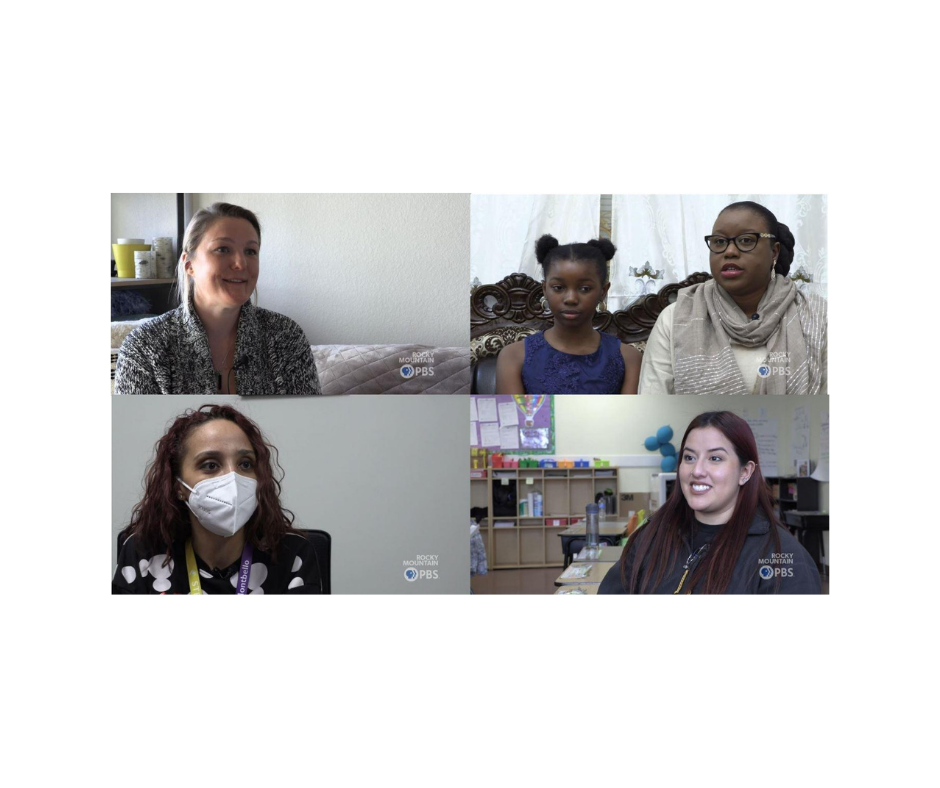
Two years after the initial shutdown, four Denver-based parents shared with Rocky Mountain PBS some of what they’ve been through, the ways they’ve coped and how they are still feeling the effects of the global pandemic.
Kristin Franke, a single mother to a 4-year-old, shared that when the pandemic first hit, she was laid off from her job. It was tough for her.
“There’s just a lot of unknowns going on, and I think there is a lot of fear still, and nobody knows how we’re going to get caught up; that’s a big one,” Franke said. “The biggest struggle is being at home with my daughter all the time and not having any outside help.”
Franke now works from home. She, like the other moms we spoke with, said her daughter’s virtual learning was particularly challenging. To keep the family balance in her household, she let her daughter know that just because she was learning virtually, that didn’t mean it was time to play. Franke suggested parents set up a schedule at home to keep everyone on track, just like if your child was at school.
Mothers Lorena Popoca, Kadi Kouyate and Ivy Foster have similar set-ups at home for their kids’ learning.
WATCH the video from RMPBS.