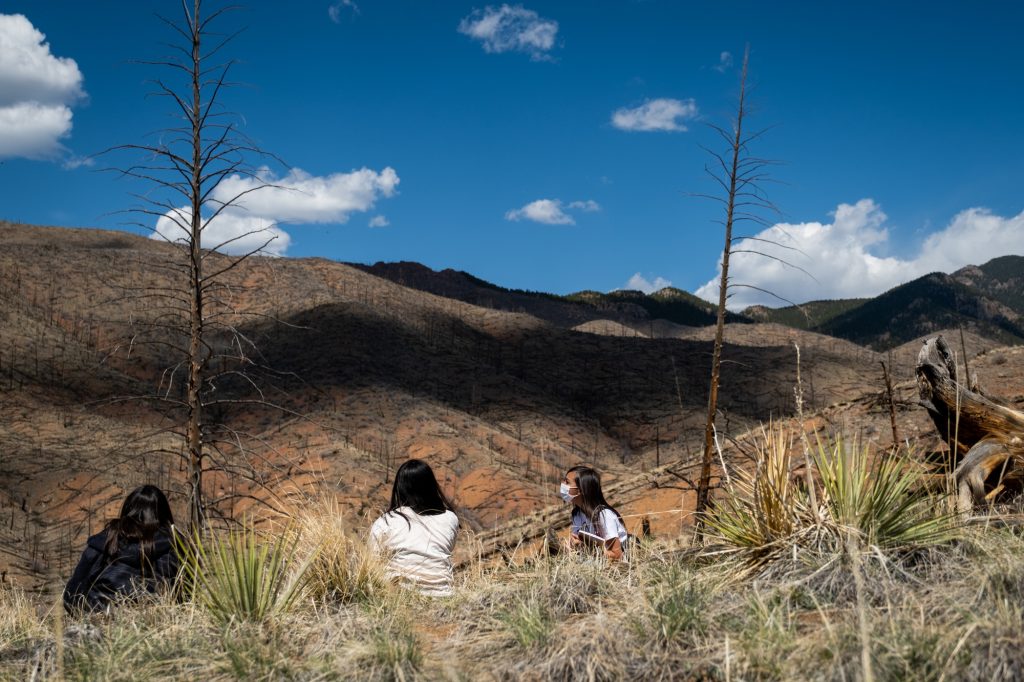
Middle school students from the American Indian Academy of Denver visited the site of the Hayman fire earlier this spring to study the affects of wildfire on the environment. Through their STEAM curriculum in class, students were able to study the physical components surrounding wildfire management including weather, erosion and geology, but what makes this school so special is the infusion of indigenous practices in their learning.
A clear example of how ancestral Indigenous views have relevance today is Indigenous knowledge and practices about wildfire.
“Back when Indigenous people were on their land, they practiced controlled burning,” explained eighth-grader Rose Leyba.
Native peoples set up a perimeter and burned within it, clearing out underbrush. New plants would grow back and replenish the forest, she said. When white settlers arrived, Leyba said they brought a different philosophy on fire.
“It had a different meaning than it does for the Indigenous people,” she said, such as using the science of fire for weapons or burning things that weren’t medicine.
And the modern view on wildfires? Suppress them at all costs. Without the periodic fires, the forest lost an important control mechanism. The forest in the Hayman fire was unnaturally dense, adding fuel to an already dangerous situation. To better understand fire in Colorado, the students studied wildfires around the world — and how Indigenous views on wildfire are starting to influence fire management strategies in places like Australia and California.
Listen to Colorado Public Radio’s Jenny Brundin as she traveled along with the class here.
Photo credit: Eli Imadali, CPR News